

When was the last time you bought a book just because you liked the cover? My answer to that question is often, ‘…the last time I bought a book’.
The appearance of a book might be far from the only reason you might pick it up—think recommendations, the newest book from your favourite author, a debut you just have to read—but sometimes it will be. Occasionally, you go into a book shop or browse books online and you might be looking for something else entirely when you see it: a book with a cover so gorgeous you must have it. You’ve never heard of the author, maybe you rarely even read the genre, but something inside you is telling you, ‘That would look gorgeous on my shelves, I must have it.’
If you’re anything like me, the blurb is often an afterthought in these cases, though I would give it a read after I’ve somewhat arbitrarily decided the book will be mine.
Although this is an extreme case, the fact remains that we all judge books by their covers, whether we intend to or not. If you’re a part of the online book community, this is an even more apparent part of reading or talking about books, despite the age-old proverb, ‘don’t judge a book by its cover’. Being active in online spaces has led me to think a lot more about the relationship between the words inside a book and their cover, one that did not initially exist when books were primarily bound to protect the precious sheets of words inside, not for competition.
Is ‘Don’t Judge a Book by Its Cover’ Bad Advice for Readers?
This saying is meant to apply to almost everything in an abstract way even though, ironically, judging an actual book by its cover is usually necessary. While it’s good life advice to avoid taking things at face value, books nowadays are designed to do as much work as possible with their covers. Sometimes the whole point of them is to invite immediate judgement, especially in the modern world where the constant influx of new books floods even the fastest readers with endless choices. It’s the first impression of a book—of its cover design, title, and author—that makes you linger long enough to discover what it holds inside.
However, it can be unhelpful to make a snap judgement based only on the cover of a book. I tend to focus on the positive experience of judgement that happens when a book you otherwise would not have found draws you in and I forget the obvious negative side of being put off by one. Maybe your favourite author has a book come out with a cover you don’t like, or you look up a book enthusiastically recommended by a friend only to discover you can’t get past the strange cover design. You might cringe when a publisher changes the covers of an entire series before it is over and ruins the cohesion of your shelves, though often this is done to increase sales, or better suit the genre the book is in, and personal tastes are irrelevant.
Surely it should not matter what the cover looks like if the words inside are the same? Wrong.
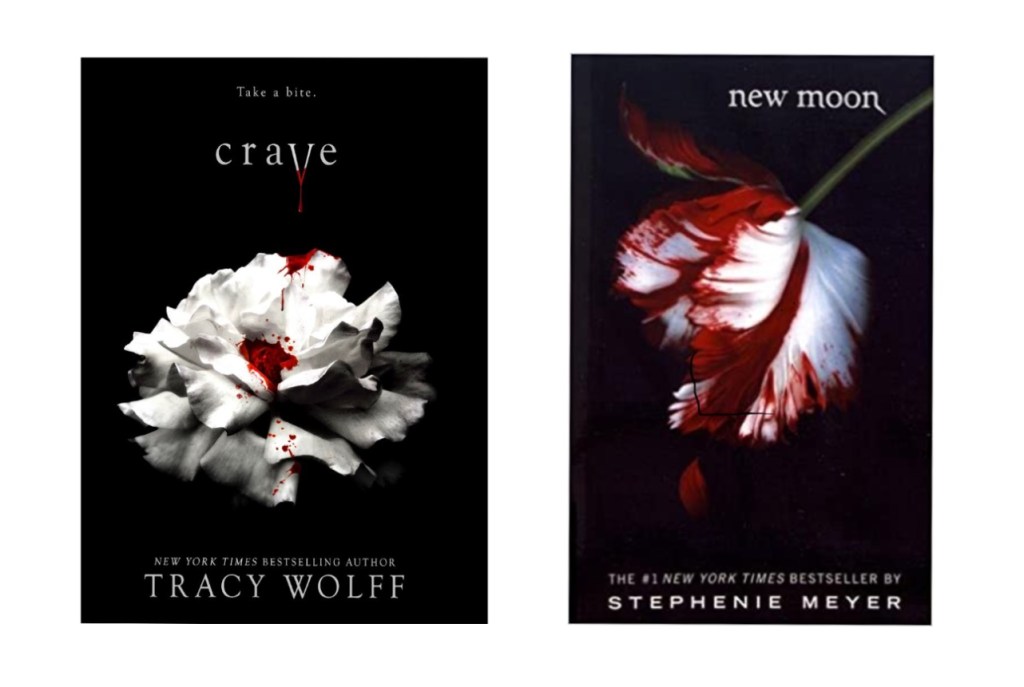
Graphic designers and marketing teams spend time ensuring that a cover helps a book find a suitable place in the market to maximise potential sales. Books covers are made with intention, and therefore I don’t believe they can ever be ignored, primarily because they are the first glimpse you get of a new book. Often, book covers will be specifically designed to fit neatly into a genre or a collection of an author’s published works simply to catch your eye as something similar that you might want to read next. Even if it is subconsciously, readers want books to look like they will deliver a certain type of story and publishers know this. You might be an avid horror reader and accidentally overlook a truly gripping read if the cover suddenly had bright colours and a smiling cartoon character on the front. ‘Don’t judge a book by its cover’ is not necessarily bad advice, but to follow it doggedly goes against the suggestion of a book’s cover as an intentional sales strategy and, more importantly, as art.
Why You Might Not Want to Judge a Book by its Cover
While it’s rather easy to fit books into their core genres based on their covers nowadays, so many books blend and borrow from different genres that it is impossible to fit every theme of a novel onto its cover, and this can be misleading. Romance novels that intertwine a budding love with much darker themes still maintain warm, bright colours on their covers, which may cause some readers to be blindsided by a potential trigger. This is a good enough reason to avoid relying solely on the cover of a book and its tiny blurb to ensure we get a better sense of what we are about to read.
Important things like trigger warnings aren’t always circulated with the hype around a book that is mainly being picked up for its overall genre or even its amazing cover, especially on apps like TikTok, where many users share nothing but the covers of books they enjoy and expect other readers to make their decisions based on these visual recommendations. So, even though I’m guilty of being persuaded to read something based on how it looks, you should always remember that the cover of a book alone will not always give you enough information to be able to read it, but it can usually point you in the right direction.
To sum up, I’m a firm believer that you should judge (and celebrate) the covers of books as much as you like, whilst also doing your research before you buy to prevent too many surprises caused by very generalised marketing. Hard work has gone into the creation of every book cover, just as it has gone into the words inside, and books should be appreciated for how they look as well as after a satisfying read.
Isn’t it lovely to be able to decorate your shelves and your mind?
 Read 'N Riot