
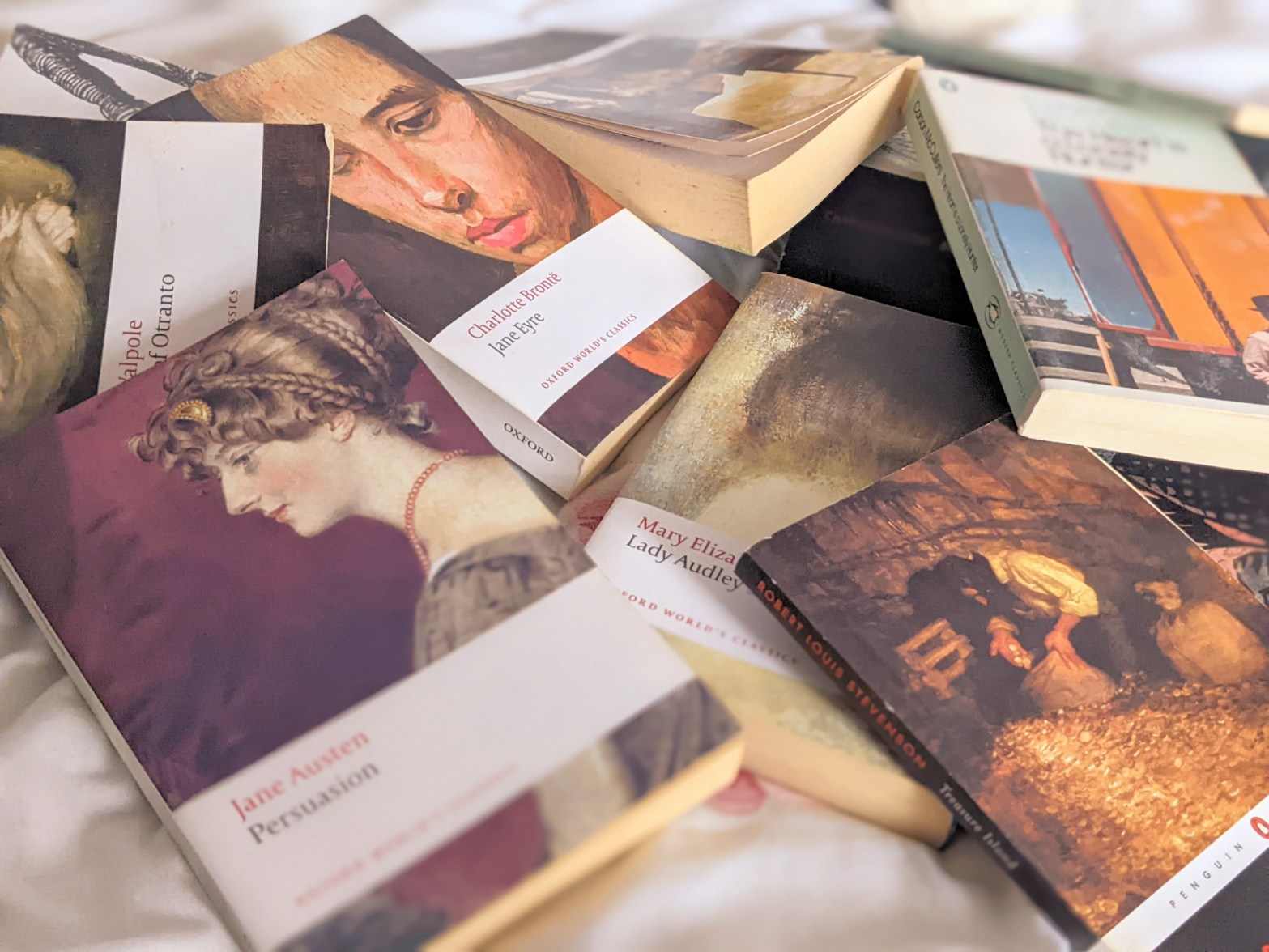
Sometimes it can feel like you need higher education to unlock the ability to read classics, but I’m here to tell you that you don’t. Though the frequency with which you read classics during a literature degree necessitates that you are able, it also demonstrates that the only way to get better at reading and dissecting classics is to read classics, which you don’t need a university to do.
Some of my favourite books are classics, and with their unique, gripping stories, they were not difficult to get through at all. Anyone who can read has access to classics and the best part is that you can get a lot of them without spending any money, though it may require an investment of your time.
Why classics are hard to read
- Lack of context – Without any social and historical context for the period you are reading about in a classic, it can be hard to relate to or understand some of the social and political events occurring. This is probably the biggest issue for accessibility, as while you may very easily be able to read the language, the impact of the story will lessen with your degree of context.
- Changes in language – When you pick up an older book, it does not take very long to realise that sentences are longer, some words have fallen out of use, and things may be said that go straight over your head. Having to look up words or phrases to discern their meaning can make getting through a classic a slog.
- Peer pressure – There are a lot of people who feel intimidated by classics for their somewhat arbitrary, highly regarded status and while that may be inviting for some, it has the opposite effect on others who feel there is a select part of society who are barred from ever truly understanding the greats.
- Length – the sheer size of some classic pieces of literature is probably more important than it might seem in putting people off reading them. Nowadays, our attention spans are shorter, and a lot of classics are a lot longer than your average book thanks to the fact that they would have been serialised in newspapers, released week by week in more digestible forms than what we read them in today.
How to start reading more classics
- Leave your expectations at the door – whatever you think the experience of reading a classic will be, forget it. Allow yourself to accept the book for what it is rather than what you have heard about it. You are under no obligation to feel the same way about a book as anyone else, just as you are under no obligation to read them in your free time if you do not wish to.
- Take your time – reading is like a competitive sport nowadays, with people boasting about having read upwards of ten books a month. This can put people off reading a classic as, despite having read 800 pages, it might lead to only having read one book in a month. This does not matter. Reading is not about how many books you can get through, but what you can get from the books you do complete. So take two weeks or two years to read that book, it does not matter.
- Practice – It’s no secret that there are some classics that will be a challenge, which is why taking it slowly and reading them more often are part of a learning experience that will open you up to reading things that might have originally seemed daunting. If you need to, you can also look up summaries or analyses online to supplement you’re reading of the text and develop a better understanding that way.
- Start somewhere accessible – There are quite a few classics that are useful as an introduction because their language is plainer, the stories are already familiar and quite frankly, shorter. These include books like Jane Eyre by Charlotte Bronte, The Adventures of Sherlock Holmes by Arthur Conan Doyle, Rebecca by Daphne Du Maurier, Frankenstein by Mary Shelley, The Count of Monte Cristo by Alexandre Dumas, and The Picture of Dorian Gray by Oscar Wilde.
Ultimately, if you have fewer expectations going into a classic as to what it will be like, how long it will take you to read, how much you’re going to love it because the rest of the world apparently does, you’ll have a far easier time. You may not like reading classics now, but with time, if you’re interested in journeying into the world of older books, you can come to enjoy them too.
 Read 'N Riot